The New Digital Proof of Existence: Why Having No Social Media Suddenly Makes You Suspicious
I tried to publish a press release about quitting social media. The press distribution service refused to verify me — because I had no social media accounts to show. A small, very real story about a world that can no longer place people outside of platform logic.
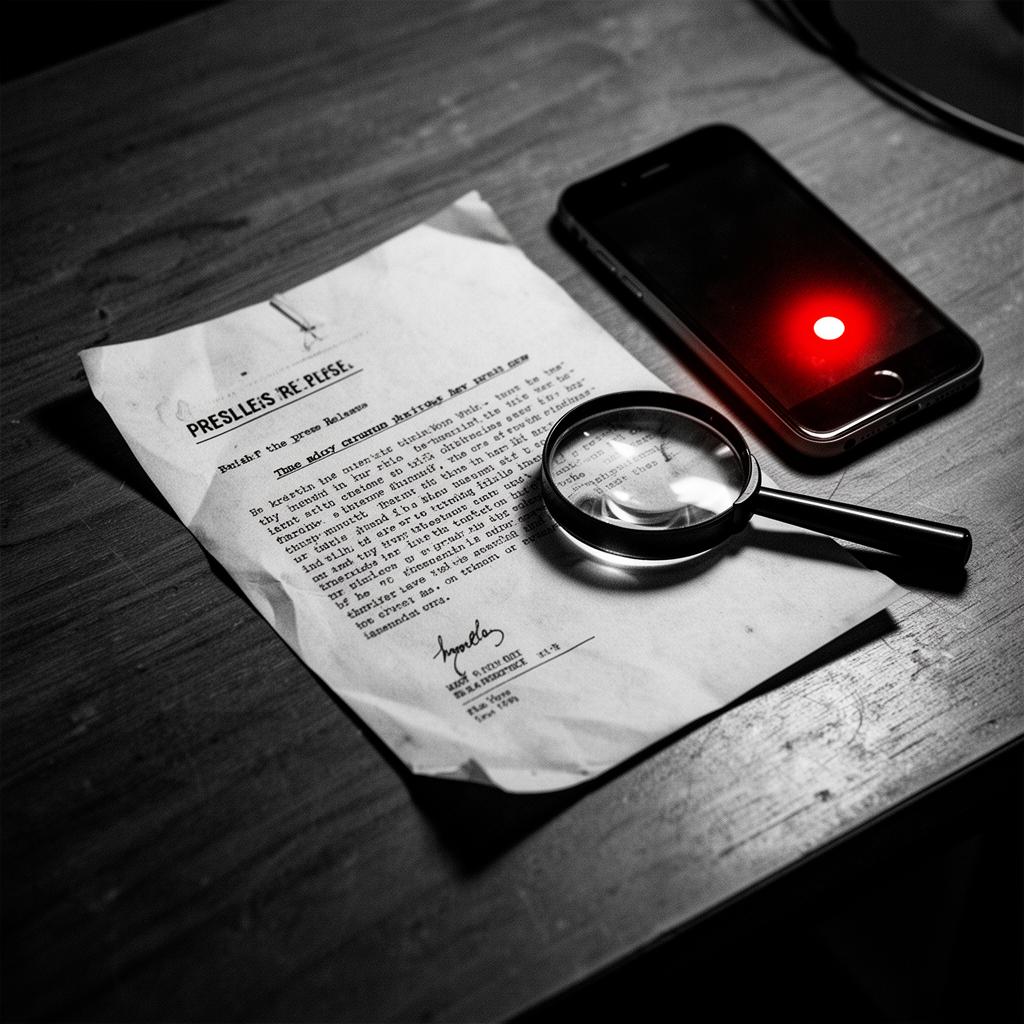
Sometimes reality writes the better satire. Not the cleverer one, not the more elegant one — but definitely the more absurd one. I tried to publish an international press release about my book on quitting social media. The distribution service refused to approve my account because I had no social media accounts to verify me with. Quit the Feed? Sure. But first prove you have one.
I just wanted to send out a press release
Nothing wild. Nothing shady. No crypto, no miracle supplements, no AI-powered toothbrush, no revolutionary coaching method discovered during a silent retreat in Bali. Just a press release. About my book. About my new platform. About the idea behind QUIT THE FEED — a project about social media addiction, digital dependency, and the question of whether quitting the feed might soon become as normal as quitting smoking once did.
The title of the book is Social Media is Like Smoking. The argument, broadly: maybe it is no longer particularly healthy that we all spend so much of our lives on platforms that measure our behavior, sell our attention, and quietly teach us that life only really happened if it was somehow visible. So far, so reasonable.
For that, I needed press. Not Instagram. Not TikTok. Not a moody reel of me staring out of a window while a fragile piano loop plays in the background. Just a press release. Old school. Media logic. Journalism. A name. A website. A book. A topic. A contact. Done. I ended up at EIN Presswire, an international press release distribution service. It sounded like the right place. I created an account. I submitted my information. I explained who I am. Full name. Websites. Book. Platform. Background. Everything one usually provides when one is not an anonymous crypto bro with an AI-generated profile picture.
Quit the Feed? First prove you have one.
And then it became beautiful. Or, let's say: beautifully absurd. Because, essentially, I was told that my account could not be approved because I do not have social media accounts, or could not provide them for verification.
I sat there and laughed. Not a joyful laugh. More the dry, slightly hysterical laugh you laugh when the world accidentally performs a sketch and does not realize how good it is.
I wanted to publish a press release about quitting social media. And the press release service wanted to verify me through social media.
Let that sit for a second. It is a bit like an addiction clinic saying, "Please bring your liquor store loyalty card for registration." Or a stop-smoking campaign requiring a Marlboro Club profile. Or a sugar-free program asking you to verify your credibility through your active Haribo account. You really could not make it up.
When the feed becomes your ID
Of course, one could say: well, that is just their internal process. Companies need to verify who publishes press releases. There is spam, fraud, fake accounts, questionable actors. Fair enough. I understand the basic idea.
What I find fascinating is the casual assumption that social media has become a legitimate tool for proving whether someone is real, credible or trustworthy. It is not as if I wanted to remain anonymous. No fake name. No fantasy company. No mailbox address on the Cayman Islands. There were websites, an imprint, a book, a platform, a biography, public traces. Real traces. Just no social media profiles.
And suddenly you realize: in some systems, that is no longer enough. The question used to be: Does this person exist? Now the question seems to be: Does this person exist in the feed?
At first glance, that sounds like a small detail. It is not. Social media has quietly turned into a kind of digital passport. Nobody officially decided this. There was no public debate. No democratic mandate. No law. It simply happened. First, social media was a toy. Then a communication channel. Then a visibility tool. Then a business necessity. And at some point, almost without anyone noticing, it became a trust signal.
If you are on LinkedIn, you seem professionally real. If you are on Instagram, you seem culturally present. If you are still on X, you at least appear to be alive in some argumentative corner of the internet. And if you are nowhere? Then you have to explain yourself.
That is the actual joke. Or maybe the actual problem. Permanent digital presence is no longer what needs explaining. Absence is.
The strange suspicion of not being there
I know the look by now. "What do you mean, you're not on LinkedIn?" — "Not at all?" — "Not even passively?" — "But how do you do business?" — "How do people find you?" — "How do you stay visible?" Sometimes it sounds as if I had just admitted to living in a cave and communicating with the next village through smoke signals.
But it is actually quite simple: at some point, I realized that these platforms were taking more from me than they were giving. Time. Focus. Calm. Thoughts. Inner order. And yes, a certain sense of dignity. This constant little self-auctioning, this endless "here I am, here is what I think, here is what I do, here is what I ate, here is why I matter" — I could no longer take it seriously. Especially not myself in it.
So I left. No drama. No farewell post. No "Dear community, I am taking a conscious break from this space" announcement, which then gets 300 comments and is, of course, still social media content. I just left. And since then I keep noticing how much the world is built around the assumption that you have not. It starts in harmless conversations and apparently ends with press release services using social media accounts as part of a reliability check.
Which is the revealing part. Because this little experience confirms the thesis of my book better than any campaign ever could. Social media is no longer just a place where we share content. It has become a place where we are expected to prove that we are happening.
No feed, no release
Maybe this is why the smoking comparison works so well. There was a time when smoking was completely normal. In restaurants. In offices. On planes. In television studios. At family gatherings anyway. Smokers did not have to explain themselves. Non-smokers did. They were the difficult ones. The party poopers. The ones opening the window.
Today, social media works in a surprisingly similar way. Everyone is there, so it feels normal. Everyone participates, so it seems reasonable. Everyone uses it for work, so it appears necessary. And if you say, "I don't want to do this anymore," you suddenly find yourself standing slightly outside the room, explaining why you no longer wish to sit in the digital smoking lounge. Social media is like smoking — and without a cigarette you can't even enter the smokers' lounge.
But the more interesting question would be: why do we consider it normal that people should constantly show themselves, measure themselves, compare themselves and keep themselves publicly available? Why does constant visibility look professional? Why do we trust profiles more than websites, books, published work, personal correspondence or actual research? And why does a person without social media now seem more suspicious than a person with a perfectly curated profile that may be entirely staged? That is quite mad.
An active account proves very little. Anyone can build a professional-looking profile today. AI-generated portrait. Bought followers. Polished copy. Fake testimonials. Strategic friendliness. The internet is full of people who are extremely visible and surprisingly empty. At the same time, there are people who leave very few traces on platforms but do real work, write real books, develop real ideas and have real biographies. And yet the equation in our heads has become: Visible equals relevant. Findable equals credible. Active equals trustworthy. Convenient, yes. Accurate, not necessarily.
No LinkedIn, no trust?
This is where it gets interesting. Because we have started to confuse visibility with reliability. A person with a lively profile feels more trustworthy than a person with a quiet website. A steady stream of content looks like activity. A polished personal brand looks like competence. A profile picture, a job title and a few endorsements can create the illusion of substance very quickly.
But we know better. We know how easy the performance has become. We know that social media is full of staging. Ghostwritten posts. Engagement games. AI-generated comments. Polished origin stories. Thought leadership without much thought. Authenticity as a content format. Vulnerability as a growth strategy. Humanity as a funnel.
Still, we keep treating social media presence as a shortcut to trust. Why? Probably because it is easy. It is easier to scan a profile than to assess a person. Easier to check activity than credibility. Easier to see whether someone is "present" than to ask whether they actually have something to say. And this is where social media has made us intellectually lazy. We no longer research. We glance. We no longer verify. We profile. We no longer ask, "Is this person substantial?" — we ask, "Can I find them quickly?" That is not progress. That is convenience wearing a very shiny name badge.
If you don't post, do you even exist?
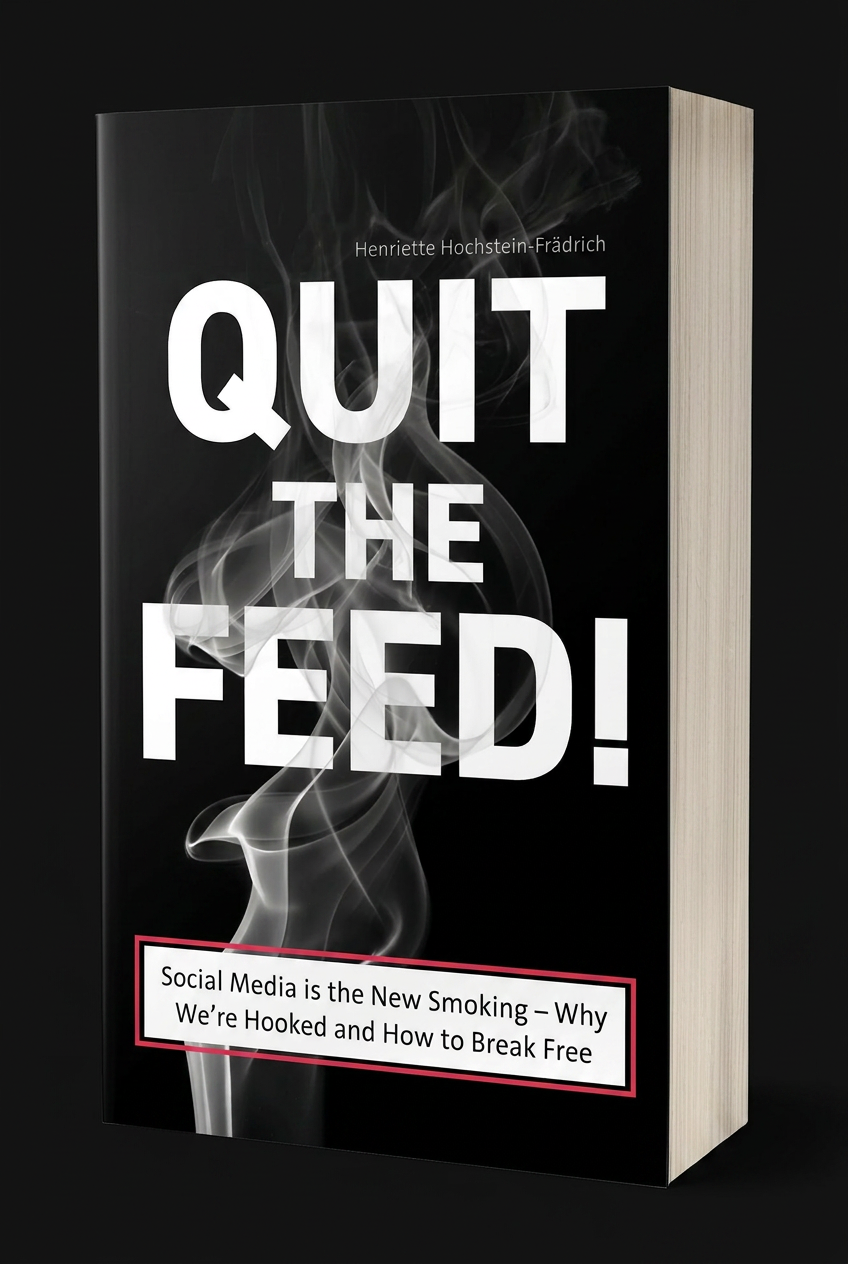
This cultural shift — from real identity to platform identity — is the heart of Quit the Feed!. How to leave the feed without disappearing from the world, and how to rebuild a professional and social life that doesn't require constant performance.
Read the book →The exit is not just personal
What I find so fascinating about the EIN Presswire episode is that it shows how quitting social media is not merely a private decision. Of course, quitting is about habits. Dopamine. FOMO. Comparison. Boredom. The nervous little hand movement toward the phone. The famous "just a quick look" that somehow turns into twenty minutes of life that afterwards feels like cold fries: consumed, but in no way nourishing. All of that is real.
But the exit is not only hard from the inside. It is also made harder from the outside. Because more and more systems assume social media as infrastructure. For visibility. For networking. For reputation. For professional legitimacy. For trust. And, apparently, sometimes even for press work.
That makes the act of leaving much bigger than people think. You are not just deleting an app. You are stepping out of a whole architecture of expectations. You are not merely saying: I no longer post. You are also saying: I no longer accept that visibility and existence are the same thing. And that is where things become uncomfortable. Because many tools, media habits, business models, marketing narratives and professional rituals are built on the assumption that everyone stays inside. Someone outside the system disturbs the logic.
If you don't post, do you even exist?
This is the question underneath all of it. Not always spoken out loud, of course. That would sound too ridiculous. But it hovers there.
If you are not on LinkedIn, are you professionally relevant? If you are not on Instagram, are you culturally alive? If you are not searchable inside the big platforms, can people trust you? This is the new digital burden of proof. And it is sneaky because it does not announce itself as coercion. Nobody says, "You must be on social media." They just build more and more processes in which not being there becomes inconvenient, suspicious or strangely hard to explain.
That is how norms work. Not by shouting. By quietly becoming the default. At some point, the person who opts out is the one who has to justify the choice. The smoker does not explain the cigarette. The non-smoker explains the fresh air.
Maybe the rejection was a gift
I could have simply been annoyed. I was, briefly. Then it became material. Because, in a way, EIN Presswire handed me the perfect little parable:
An author writes a book about leaving social media. She wants to publish a press release about it. An international press release service asks for social media as part of verification. The author has no social media because that is precisely the point. The account is not approved.
It is almost too neat. As if some dramatist had said: "Could we please compress the entire cultural conflict into one absurd everyday situation? Thank you." There it is. We live in a world where the refusal to participate in social media is not simply read as a conscious decision. It is read as a gap. As if something is missing.
But maybe nothing is missing. Maybe there is finally space. Space for a website that does not need to be fed three times a day. Space for thoughts that take longer than a post. Space for real research. Space for a book. Space for a position that does not want to be translated into content every five minutes. I know — in today's world, that almost sounds suspicious. Which may be exactly the point. It is also part of the broader cultural shift I describe in "Quitting Social Media is the New Sugar-Free": absence is slowly becoming a statement.
I am still real
So yes, I have no active social media accounts. I exist anyway. I have a website. Several, actually. I have a book. I have a platform. I have an imprint. I have an email address, which in these times feels almost touchingly nostalgic. I have a professional history, real projects, real talks, real clients, real texts and a real name. I am just not in the feed.
And maybe that is the provocation. Not that I wanted to publish a press release. Not even that EIN Presswire did not approve my account in this case. But that this small episode shows how difficult it has become for our world to take people seriously outside platform logic.
If you do not post, you suddenly have to prove that you exist. That sentence stays with me. And maybe it is one of the best reasons to write about this. Because if social media has become a reliability check, then we have a problem. Not the people without accounts. The systems that can no longer imagine authenticity outside the platforms.
I quit the feed. I am still here. And no, I do not need an Instagram account to be real.
This episode is, in a way, a chapter the book wrote by itself. The full argument — why social media became a digital ID, why visibility should never be confused with existence, and what a real exit looks like without social suicide — is in Quit the Feed!.
By Henriette Hochstein-Frädrich · Author of Quit the Feed!