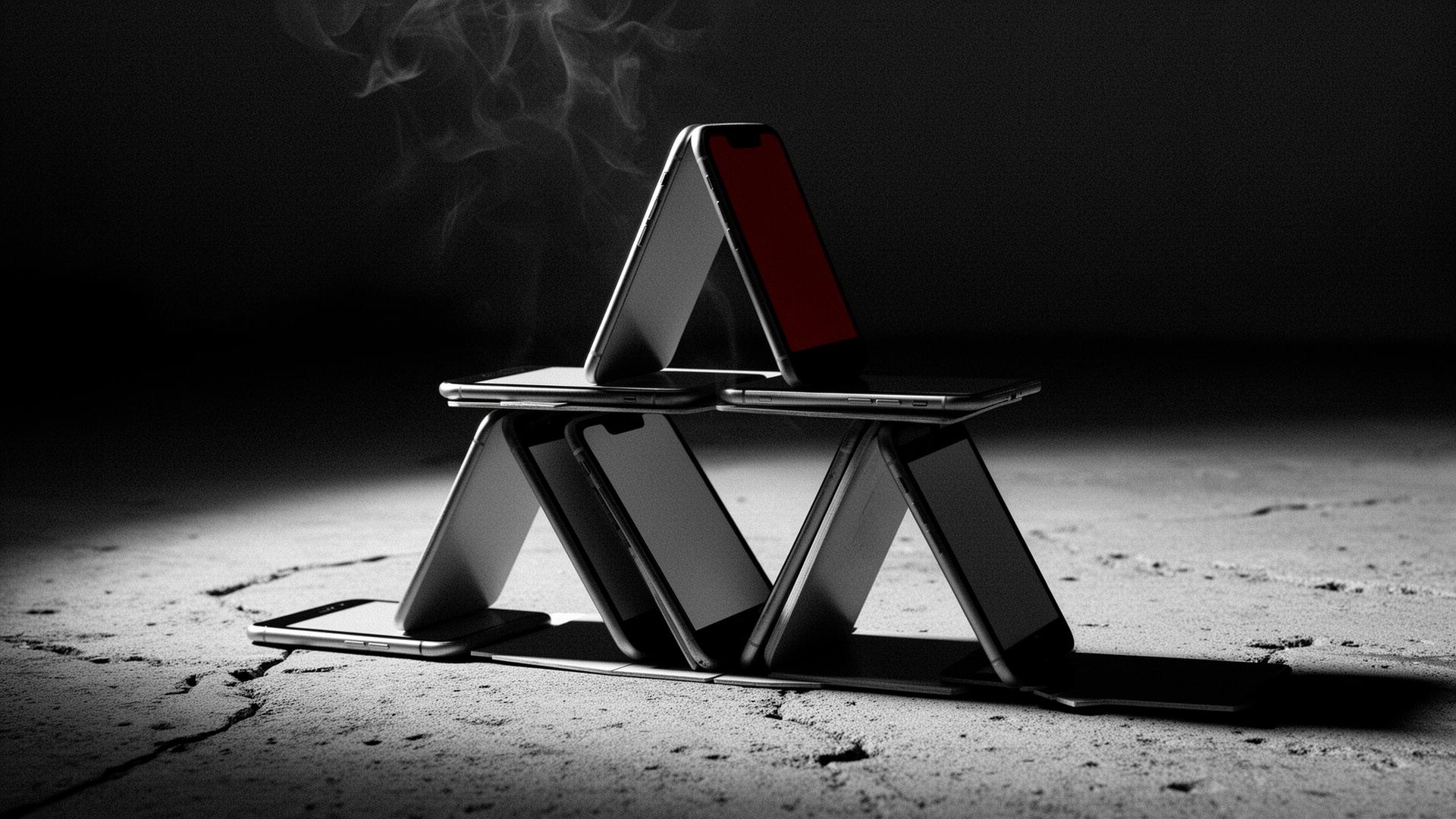
Social Media is the New Smoking — And Science Increasingly Agrees
Addiction by design, addiction with intent, addiction with consequences. The parallels between social media and Big Tobacco are no longer a metaphor — they are documented. A look at the neurology, the business model, and the moment the dealers themselves began to doubt.
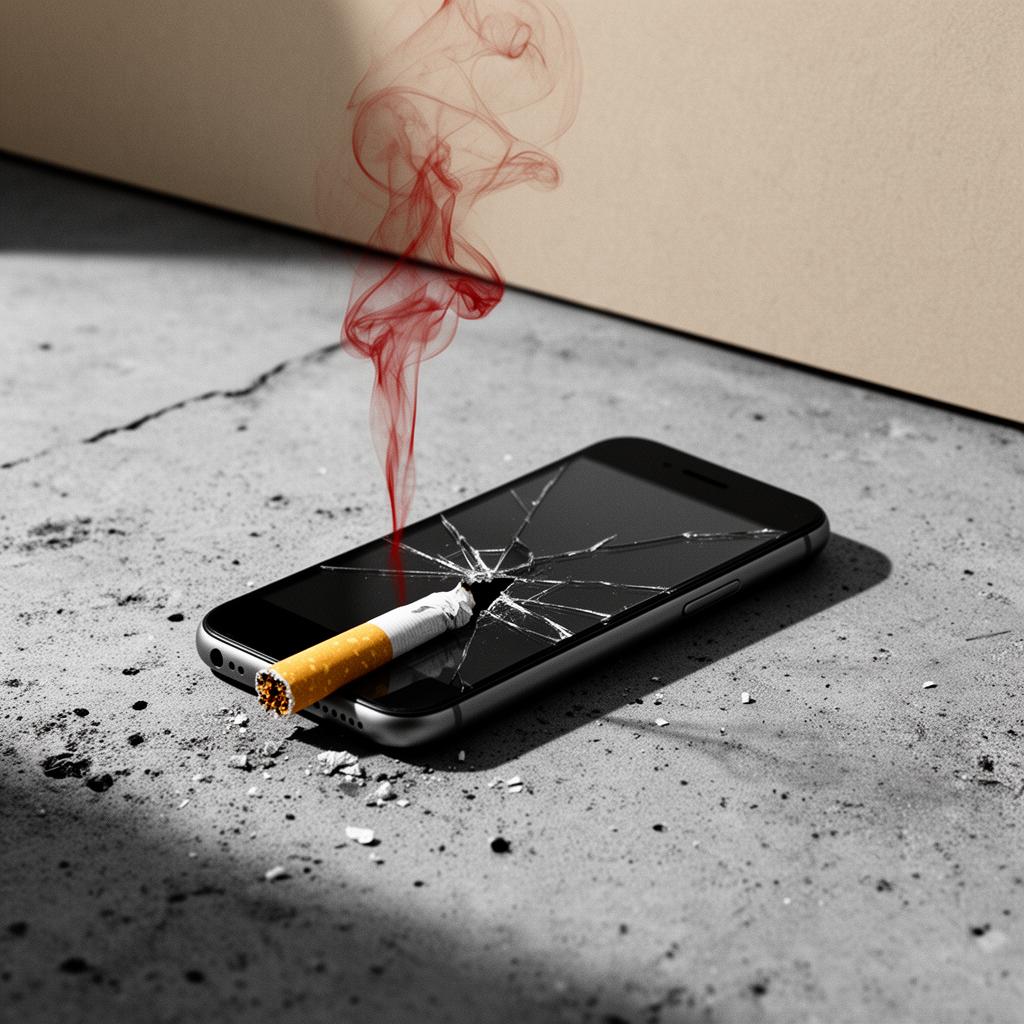
Addiction by design. Addiction by intent. Addiction with consequences we are only beginning to count. What once sounded like a provocative metaphor has become a documented fact: social media interferes with your brain, your hormones, your sleep, your relationships and your sense of self — much like a cigarette wedged between two thoughts.
Yes, I know what you are thinking. Here comes another humourless digital ascetic to tell you how tеrrible TikTok, Instagram and LinkedIn really are. Yawn. Boring. I already know — and I'll keep scrolling anyway.
I understand. I thought the same thing for years. And still — let's be brave together for a moment and look into the abyss. The real one. The ugly one. The one we usually swipe, like and tap away. We are going to eat the frog. Rip off the bandage. Slowly. Painfully. And once the wound is exposed, we are going to treat it. Properly. With clarity. With dignity. So it can finally heal.
Too much pathos? Maybe. But anything quieter no longer reaches us. We are all attention-economy-poisoned, hooked on emotional spikes, conditioned to scroll past anything that whispers. So I need the sledgehammer to catch you. Only this time the sledgehammer is not fake. Social media is the new smoking. Really. And the science increasingly agrees.
Social Media Is the New Smoking — Really?
When this comparison first crossed my mind, I flinched. Too big? Too provocative? Too simple? No. Too true. The parallels are not merely there — they are uncomfortably exact. The constant craving. The short high. The empty crash. The reach for the next click. The cigarette has found its digital successor. It looks better, doesn't smell, and works just as destructively. On your brain. Your psyche. Your body. Your soul. And on our society as a whole.
Social platforms have become as ordinary as a toothbrush or a Wi-Fi password. But what actually happens when we scroll too often, too long, too thoughtlessly? Excessive use of Instagram, TikTok & Co. is increasingly being linked to the same kind of health risks once reserved for cigarettes. And this is not a fringe theory from digital dropouts. In 2023 the United States Surgeon General, Dr. Vivek Murthy, formally called for warning labels on social media platforms — yes, like the ones on cigarette packs. It is in his report. No joke.
So the question is on the table, nicotine-stained and all: are social platforms poisoning us in a way that resembles tobacco? Let's look at the same areas a smoking habit attacks:
- The brain — what dopamine and the reward system are actually doing
- The psyche — how deep the behavioural addiction goes
- The body — cortisol, sleep, the nervous system on permanent alert
- The soul — why we feel so empty despite being constantly connected
- Society — how a digital cigarette became normal
Social Media Addiction in the Brain: The Dopamine Carousel
Social media fires on your brain like a pinball machine on ecstasy. Every like, every comment, every notification is a micro-shot of dopamine — the molecule that makes you feel briefly, gloriously alive. The reward system lights up the way it does with nicotine, cocaine or gambling. But here is the catch: the more you click, the less your brain responds. You need more. Longer. Faster. Welcome to addiction. And when you stop scrolling? Emptiness. Restlessness. Withdrawal. Exactly like a cigarette. And you reach, very quickly, for the next "drag" — another bottomless feed.
Scroll, like, heart, comment — and there it is: dopamine. Likes are the cigarette break for the soul, the glitter dust that briefly makes a quiet life feel exciting. This is not a metaphor. It is neurology. With every interaction stimulus, your reward system fires and your brain releases the same neurotransmitter that nicotine, cocaine and heroin activate. You feel — for a moment — boosted. Seen. Maybe even loved. And that is exactly what creates the hook. The platforms know what you need before you know it yourself: belonging on demand, the sense that you matter, and always a little more of it.
The platforms are built this way on purpose. You are kept inside this dopamine loop by design. (More on who profits in "I Need It for My Business" — and 14 Other Lies We Tell Ourselves.) But none of this is genuine connection. It is an over-stimulated substitute, and your brain reacts to it as if you had just taken a serious dose of meth or alcohol. These artificial, fast, intense rewards push your neurobiology out of rhythm. The brain adapts. It is retrained. And, sadly, it forgets how to respond to slower, natural, sustainable sources of joy. Real life starts to feel flat.
What follows is the crash. The moment you stop scrolling, dopamine doesn't just drop — it falls below baseline. The result: that dull, restless mood when you put the phone down and think, something is missing. The morning coffee you can no longer imagine without an Instagram feed beside it. Coffee without the feed? It is possible. It is also withdrawal. The same kind that follows a night of chain-smoking. (For the full deep dive into how dopamine actually works — and why "dopamine detox" is a misnamed but real intuition — see What Even Is This Dopamine Everyone Keeps Talking About?)
Neuroscientists have long described the classic markers of addiction:
- Tolerance — you need more content, more stimulus, more time for the same hit.
- Withdrawal — when the phone stays off, restlessness, FOMO and even measurable physical stress kick in.
One researcher put it bluntly: "Social media is a dopamine injection straight into the reward system." Or, more sharply: "The smartphone is the modern minimally invasive needle, delivering dopamine refills around the clock."
This is not just a vivid image. MRI studies show that in heavy social media users the structure of the brain actually changes — and not for the better. The amygdala, our emotional centre, shrinks, just as it does in people with substance dependence or gambling disorder. The same neural circuits fire. The same dopamine pathways in the nucleus accumbens — the famous "reward centre" — light up as they do for nicotine, alcohol or roulette. That is why social media feels so good, and that is why it is so hard to leave.
Psychological Effects: Self-Worth Crash and the Addiction Pattern
You scroll through other people's lives and ask yourself, quietly: why am I not that beautiful, that successful, that effortlessly relaxed in a lavender field at sunset? Social media is a permanent comparison machine. It eats your self-worth. It feeds your insecurity. And you know it. But you can't stop. Why? Because you are already addicted — to validation, to reaction, to the feeling of belonging. All of which is a bluff. A cloud of pixel smoke. And at the end of it you are still alone. Lonely in a crowd. Social media without the social.
Psychologists now openly call this a behavioural addiction: emotional and cognitive attachment to a product that quite clearly causes harm. Usage doesn't decrease even when the damage becomes obvious. It dominates thinking. It replaces real interaction. The smartphone becomes the digital cigarette you reach for without thinking. Estimates suggest 5–10% of Americans already meet the formal criteria for addiction — not for nicotine, for Instagram.
The symptoms: constant mental background noise. Loss of control over time spent. Neglected work, neglected hobbies, neglected people. Secret scrolling against better judgement. Sound familiar? A University of Chicago study found the urge to check the phone was, in places, even stronger than the craving for alcohol or cigarettes. A single notification can launch a wave of curiosity, FOMO and dopamine anticipation. Pavlov's dog, 2.0. The phone pings, the brain expects a reward — the same way a smoker once felt relief in the mere act of lighting up.
And then comes the final boss: comparison. Social media is a permanent stage of comparison and you almost never come out ahead. You see the highlights, the filters, the smiling, the holidays, the trained bodies — and your self-image collapses. Studies show that even a few minutes of scrolling through "perfect" profiles measurably worsens how people see themselves. The ironic twist: passive consumers feel excluded, and active posters don't feel any better. A long-term study with 7,000 adults found that the more active users were, the lonelier they became. A heart is not a hug. A like cannot heal anything — it can only numb.
Add to that the rise of anxiety disorders, depression and panic that has shadowed the rise of the feed almost in lockstep. Among American teenagers we are now talking about an unprecedented mental health crisis that began, conveniently, around the same time as Instagram and TikTok. One widely quoted line put it sharply: "Social media triples the rate of depression — the way smoking raised the risk of lung cancer."
Physical Effects: Stress Hormones, Sleep and a Nervous System on Permanent Alert
You think social media stays in the head? It doesn't. Your body absorbs every like, full force. Cortisol — your stress hormone — runs a private carousel. Pulse, blood pressure, nervous system: on alert. Sleep? Difficult. Blue light kills melatonin. The brain drowns in an information tsunami. You lie there wide awake and inwardly exhausted at the same time. Long term: hello high blood pressure, hello sleep disorders, hello a body that gets sick more easily. Digital smoking doesn't ruin your lungs. It ruins your resilience.
The merest expectation of a message — you don't even need to touch the phone — measurably raises cortisol in many people. Cortisol is not a cuddle hormone. It puts the body into fight-or-flight: heart rate up, blood pressure up, blood sugar up, immune system down. Brief, it is survival. Permanent, it is destruction. Cardiovascular problems, hypertension, increased risk of stroke and heart attack — all climb. Heavy users routinely report inner restlessness, muscle tension and headaches. All symptoms of a sympathetic nervous system that never gets to switch off.
And then there is sleep — our most important repair programme. Try scrolling Instagram at night and you already know: this is not relaxation. Social media kills sleep twice over. Blue screen light suppresses melatonin. Emotional overload keeps you wired. The result: you lie there, tired but agitated. The body in sprint mode, the mind on a thought carousel. Research shows that even 30 minutes less scrolling per day measurably improves sleep quality and perceived stress. Few of us actually manage it. Most users — especially adolescents — sleep too little, too late and too badly. The consequences cascade: poorer concentration, weaker immunity, hormonal imbalance, mental instability.
Effects on the Soul: The Great Emptiness
And then there is that feeling. You know it. You scroll for hours and at the end you feel… empty. Like you ate five bags of chips. Full, bloated, and somehow contemptible. Full and empty at the same time. Not inspired. Not connected. Hollowed out. Like the morning after chain-smoking. It was briefly nice. Then only fog. And inside: nothing. Social media gives you nothing real. Only stimulus. Only impulse. No closeness. No depth. No silence.
Welcome to the loneliness paradox: constantly connected and still profoundly alone. The more we interact in networks, the stronger the feeling of inner isolation can become. Likes are not embraces. Emojis don't deliver warmth. A chat does not replace a real conversation with eye contact, silence, presence. Meanwhile our brains ride a constant rollercoaster — funny, shocking, perfect, disturbing, envy-inducing, fear-inducing — all in seconds. No wonder genuine emotion has nowhere to land. Constant stimulus blunts us.
Many people report feeling empty, exhausted and numb after long scroll sessions. Stuffed but not nourished. And almost everyone you encounter on these platforms — the influencers, the brands, the gurus — ultimately wants the same thing: to sell you something. Their image, their products, their services. The feed talks you into a problem and immediately offers the cure. Have you noticed how between the people you actually follow you now have to scroll past five or six "suggestions" and ads? Your feed stopped being yours a long time ago.
Psychologists call this social media fatigue — real mental and emotional exhaustion. Information flood. Constant noise. Stimulus on stimulus on stimulus. No pause, no processing, no quiet. Only forward, more, faster. The symptoms: difficulty concentrating, decision paralysis, the urge to withdraw. Eventually many people try the obvious antidote — a social media break — because they have noticed that they no longer feel anything at all. (If a break already isn't enough, the protocol in The Great Withdrawal: 5 Hours, 5 Steps is written for you.)
The Societal Parallel: From Cool to Sick
I am old enough to remember when smoking was simply normal. Everywhere. In restaurants. On planes. On trains. In talk shows. Completely natural — until we understood it was killing us. And, by the way, it had stopped being cool too. Today social media is at exactly that point. Everyone does it. Everyone knows it isn't good. Almost no one knows how to stop. And only a few give themselves permission to leave at all, because the excuses are everywhere and feel airtight.
What once applied to cigarettes applies now to the feed: first celebrated, then condemned. Smoking was once chic — freedom, lifestyle, rebellion. Today it is unhealthy, embarrassing, out. Social media may be standing at the same tipping point. What society calls normal is often only a matter of habit, not harmlessness. Being online is now expected. As an emerging author today, your manuscript is no longer the first thing checked — your Instagram following is. Reach first. Content fourth or fifth.
For teenagers, Instagram, TikTok and Snapchat are not optional, they are compulsory. More than half of American teens spend over four hours a day on social platforms. To opt out is to be excluded, to miss out, to be uncool. The peer pressure is brutal — exactly like smoking once was. Only now the thing being passed around is a smartphone. Ten-year-olds open TikTok accounts because "everyone else is on it". And the adults? We are not better. What, you're not on LinkedIn?! LinkedIn is our TikTok.
Behind the scenes, a machinery very similar to the tobacco industry's is running. Infinite feeds with unpredictable rewards. Red notification badges. Autoplay. AI-tuned content fitted to your weaknesses, needs and longings. The parallels to Big Tobacco are uncanny: psychologists, designers and glossy marketing engineered a product to be sexy, seductive and maximally addictive. The cigarette is the perfect product — the consumer is hooked and therefore needs more, forever. Brilliant business model. Social platforms do the same thing, only smarter. They promise fun, belonging and entertainment. What we get is dependence, overload, exhaustion.
Former tech insiders speak openly about a system built for maximum dependence — fast effect, huge addiction, hard withdrawal. A Forbes article summed it up bluntly: "Social media has the impact of 15 cigarettes a day. It doubles loneliness, triples depression, ruins sleep, fuels anxiety, addiction and suicidal ideation."
Governments are slowly waking up. Australia has moved to ban under-16 access — leaky in its first phase, but the first real Western law on this. The US Surgeon General has proposed warning labels. Lawmakers in several countries are starting to talk about regulating the "addiction architecture" itself. Meanwhile the tech giants behave exactly as Big Tobacco did: when pressure rises in one market, they shift focus to another with weaker rules. Profit knows no ethics. Your health? Mostly irrelevant.
So — One More Drag, or Time to Put It Out?
This is only the beginning. Only the first bite of the frog. Only the first look into the abyss. Let's recap, without the rose filter: social media is not just a bit of distraction. Not a harmless pastime. Not just cat videos and sunsets. It works deep. On your brain. On your body. On your soul. In a way that is hauntingly close to another great addiction: smoking.
Both light up the reward system. Both produce the classic addiction pattern — tolerance, withdrawal, loss of control. Both quietly undermine mental health. Both damage the body — whether through tar or through a daily overdose of stress hormones, sleep deprivation and a nervous system that never gets to rest. Both attack the soul: distraction instead of connection, emptiness instead of meaning, stimulus instead of stillness.
The good news: we have done this before. With cigarettes. It was a real cultural shift, a collective no, thanks, a relearning, a protection — of ourselves, of the next generation. So why not now? No one smokes on planes anymore. No one would hand a cigarette to a child. Why not also make conscious offline time, and the radical exit, the new normal? Become a digital non-smoker.
If social media is the cigarette of our era, maybe this is the moment to pause, breathe, and ask: do I really want to take another drag? Or is it time to put it out?
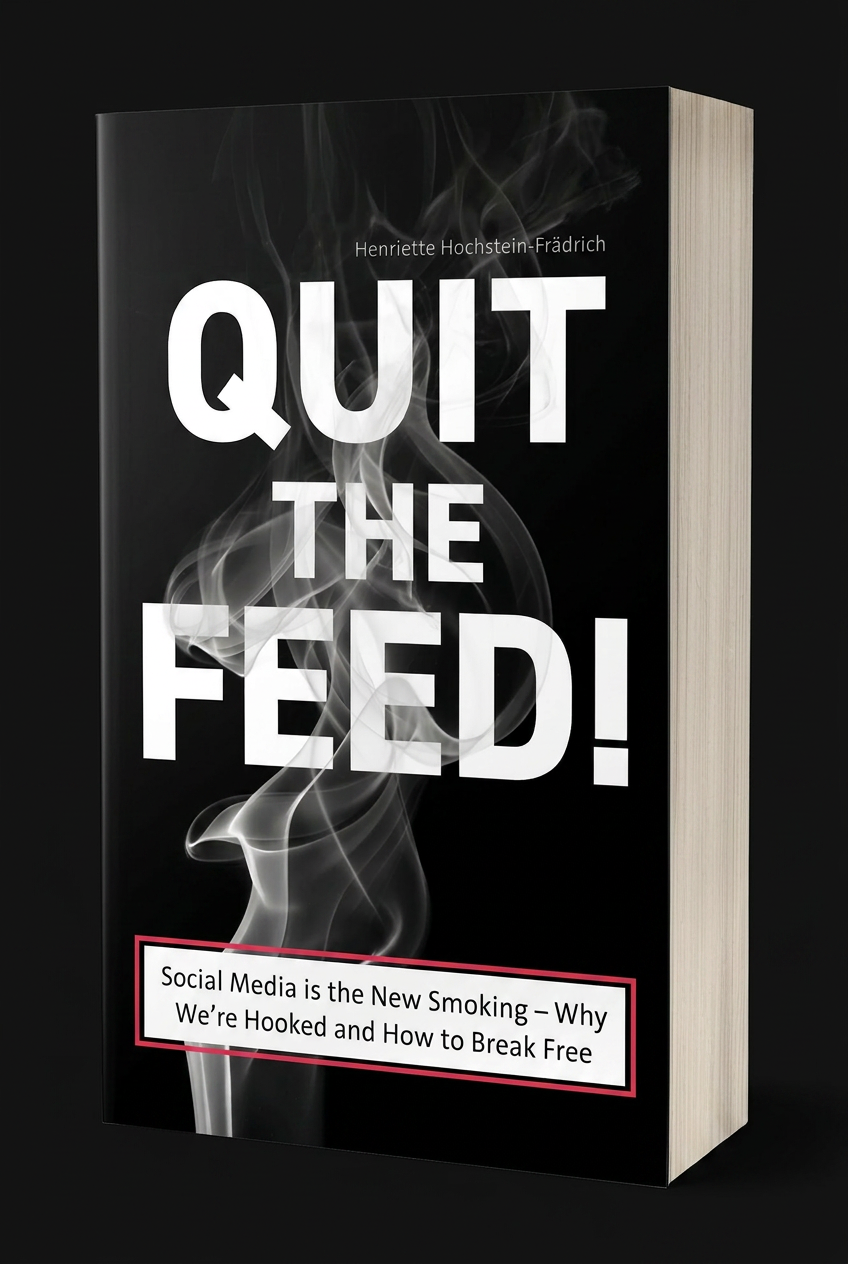
Quit the Feed! — The Full Protocol
If this essay landed, the book is the next step. A five-hour, five-step protocol for leaving social media for good — written by someone who did it, with the science, the excuses and the practical steps to walk out.
Read the book →What actually happens — and what doesn't — when you leave social media entirely is the subject of the next essay in this series: The Great Withdrawal: 5 Hours, 5 Steps. If you suspect the reasons you tell yourself for staying are not as solid as they sound, start here: "I Need It for My Business" — and 14 Other Lies. And if you have already accepted the diagnosis and want the field guide for what to do about it, the four real interventions are laid out in How to Deal With Social Media Addiction.
There is also a cultural side to all of this. What started as a personal health question — too much sugar, too much alcohol, too much feed — is quietly turning into a lifestyle shift. Why leaving the platforms is becoming the next big "free-from" trend, in the lineage of sugar-free and sober-curious, is the argument of Quitting Social Media is the New Sugar-Free.
Note: Full source references for the studies, reports and quotes mentioned in this essay are documented in the book Quit the Feed!.
By Henriette Hochstein-Frädrich · Author of Quit the Feed!