Digital Detox vs Detoxing from Social Media: The Honest Difference
Two phrases, one wellness product and one real question. Why most digital detoxes don't stick, what an honest detox from social media actually looks like, and how to tell whether you need a cleanse or a cut.
"Digital detox" has become one of the most useful phrases the wellness industry ever invented — for the wellness industry. It promises a weekend in a cabin, a phone in a basket, a juice in your hand, and a vague feeling of having done something about the thing. Then you go home, reinstall, and the thing carries on exactly as before. If you have searched digital detox or detoxing from social media and quietly suspected the framing was lying to you, you were right. This is the honest version.
The two phrases sound interchangeable. They are not. One describes a lifestyle product. The other describes what your nervous system actually needs. The difference between them is the difference between feeling better for 48 hours and getting your life back.
What "Digital Detox" Actually Means (and What It Was Sold As)
The phrase digital detox entered the mainstream around 2013, somewhere between the first wave of yoga retreats discovering they could charge double for "phone-free" and the first wellness magazines discovering that "unplug" made excellent cover copy. Borrowed wholesale from the language of substance recovery, it offered the comforting suggestion that what your phone does to you is essentially the same as what alcohol does — and that, like alcohol, you can sweat it out over a long weekend and emerge cleansed.
That framing has done two things, both bad. First, it turned a structural problem into a personal-wellness purchase: book a retreat, buy a Light Phone, install an app that locks other apps. Second, and worse, it implies that the right relationship with social media is moderation after a cleanse — that you "detox" so you can return, refreshed, to the same platforms that broke you in the first place. This is the diet-industry logic of "cheat days" applied to a behavioural addiction. It has the same success rate.
The honest definition: a digital detox, as the term is commonly used, is a temporary reduction in screen time. It is not a cure. It is not even really a detox in any meaningful sense — you are not flushing anything out of your system, because there is nothing chemical to flush. You are just briefly removing the cue. The reflex is unchanged.
"Detoxing from Social Media" Is a Different Question
Here is where the two phrases part ways. Detoxing from social media, taken literally, is not a wellness product. It is a description of what happens to a nervous system that has been on a 24/7 drip of variable rewards when you finally cut the supply. There is genuine withdrawal — restlessness, low-grade irritability, a thumb that keeps reaching for a screen that no longer responds. There is a real adjustment period. And, unlike "digital detox," there is a meaningful end state on the other side: a brain that is no longer running on platform-fed dopamine and starts to respond, slowly, to the quieter rewards of regular life. (Why the popular "dopamine detox" label gets the biochemistry wrong but points at something genuine is unpacked in What Even Is This Dopamine Everyone Keeps Talking About?.)
The diagnosis underneath this — why the loop fires at all, why the parallels to nicotine are not metaphorical, and why "moderation" is the most expensive lie the platforms ever sold — is laid out in Social Media is the New Smoking. Read it if you still half-believe a Sunday off is going to fix this. It won't.
So when people search "detoxing from social media", they are usually not asking the same question as the wellness magazines answer with "try a digital detox weekend". They are asking the much harder, much more honest question: how do I get out of this loop? The rest of this essay answers that one.
Why Most Digital Detoxes Don't Stick
Almost everyone has tried a version of this. The phone in the drawer on Sunday. The "screen-time limit" that you raised five times in the first hour. The 30-day app blocker that you uninstalled on day six. The retreat in Bali that ended at the airport gate, where you reinstalled everything before boarding. The pattern is so reliable it is almost funny — and the reason is the same every time.
A digital detox, as commonly practised, leaves four things untouched:
- The accounts. Your profiles, follower counts, posting history and login credentials are all still there, waiting. The door is closed, not removed.
- The cue. The icon, the badge, the notification, the muscle memory of the unlock-and-swipe. As long as the cue exists, the reflex re-fires the moment the detox ends.
- The identity. "I'm someone who uses Instagram for work." "I'm a LinkedIn person." "I'm the one who always sends the funny reels." Identity is the deepest hook. A weekend off doesn't touch it.
- The story. The fourteen reasonable-sounding reasons you tell yourself you need to stay — for the business, for the network, for the news, for the friends. (Those reasons are dismantled, one by one, in "I Need It for My Business" — and 14 Other Lies We Tell Ourselves.)
While all four are intact, you are not detoxing — you are taking a brief, controlled pause inside an active addiction. The body remembers. The reflex waits. The relapse, when it comes, is not a failure of willpower. It is the entirely predictable outcome of a method that was never designed to work.
What an Honest Detox From Social Media Actually Looks Like
If the wellness version is a weekend in a cabin, the honest version is a staircase with four steps. None of them require a retreat, a juice, or a $400 dumbphone. All of them require taking the question seriously.
- Diagnostic — 72 hours, apps deleted. Not "limited", not "hidden in a folder". Deleted. Three days is enough for the reflex to show itself clearly: how often the thumb reaches, how loud the silence is, how quickly the time fills back up with things you forgot you missed. This is also the step that tells you whether you are dealing with a habit (annoying, manageable) or an addiction (the thumb keeps moving on its own). The full version of this 72-hour test sits inside the broader exit map: Social Media Break: How to Take One (or Quit for Good).
- Window — 14 days, no loopholes. Two weeks with apps off, browser shortcuts cleared, notifications disabled across every device. Long enough for sleep to come back, attention to come back, mood to lift, and the algorithmic urgency in your chest to quiet down. Short enough that it does not feel like a sentence.
- Verdict — one honest sheet of paper. On day fourteen, write down what you actually missed, not what you told yourself you would. For most people the list is shockingly short — three or four names, a couple of specific contexts, nothing that requires a feed. That sheet is your evidence in the negotiation with yourself that comes next.
- The decision. The detox is not the goal — the decision it produces is the goal. Either you re-engage with the platforms on radically different terms (rare, hard, requires real boundaries), or you make the cut. If the second answer is the honest one, the protocol for doing it cleanly is here: The Great Withdrawal: 5 Hours, 5 Steps.
This is what "detoxing from social media" looks like when it is treated as a structural problem instead of a wellness aesthetic. It is not glamorous. It does not photograph well. It works.
Past the Detox, Out of the Loop
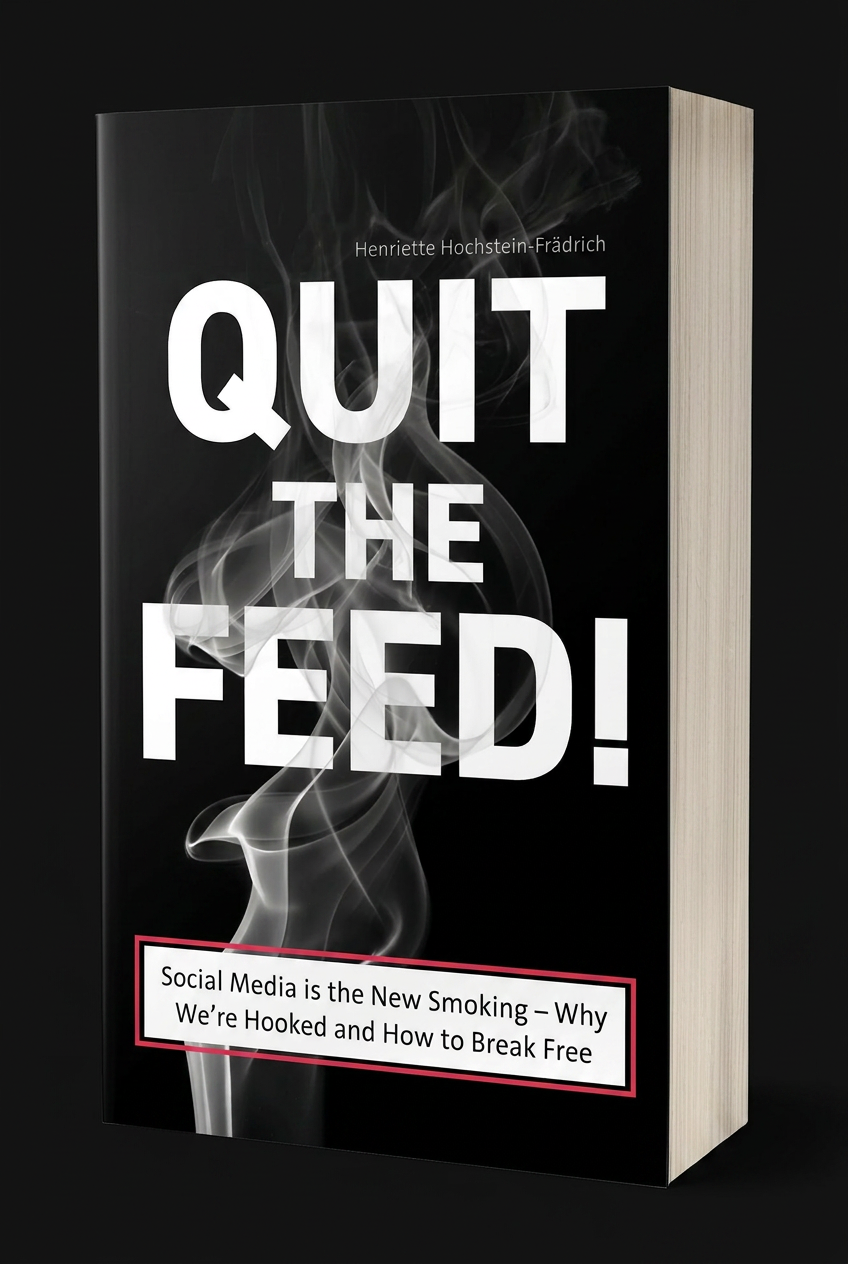
Quit the Feed! is the full protocol for what comes after the cleanse: the diagnosis, the 14 excuses dismantled, the five-hour structured exit, and the companion through the first six months without a feed. For everyone who tried the digital-detox weekend, knew it wasn't enough, and is ready for the real answer.
Read the book →The Wellness-Industry Trap
One more thing worth saying out loud, because almost nobody does. The reason "digital detox" became such a successful product category is not that it works. It is that it is endlessly repeatable. A cure you only need once is a bad business model. A cure you have to buy again every quarter is a great one.
The detox retreat needs you to come back next year. The screen-time app needs you to keep paying the subscription. The mindfulness journal needs the next volume. None of them benefit from you actually leaving the platforms, because the moment you do, you are no longer a customer for the cleanse. This is not a conspiracy — it is just the unavoidable economics of selling pause as if it were exit. Recognising it is not cynical. It is the first honest step out.
What Changes — and How Fast
If you do the honest version of the detox, the order of what comes back is predictable enough to plan around:
- Day 1–3. Sleep improves almost immediately, because the pre-sleep scroll is the single worst thing most people do to their nervous system. Restlessness is real but mostly evening-shaped.
- Day 4–7. Attention begins to return. You can read a page, sit through a film, hear the end of a sentence. Mood stabilises; comparison-anxiety drops noticeably.
- Week 2. The internal urgency softens. The body stops anticipating the next hit. The friends who matter call. The acquaintances who don't, don't — and you discover that mostly does not hurt.
- Week 3–4. The "I'm someone who uses Instagram" identity quietly dissolves. You catch yourself going an entire evening without thinking about it. That is the moment the detox has actually done its work.
None of this is a wellness promise. It is what the absence of a constant variable-reward stimulus does to a nervous system that was never built for it. You do not have to believe it in advance — the first 72 hours will start to show you.
The Honest Closing
If you came here looking for permission to do a digital detox weekend and call it good, you will not find it. Take the weekend — it will not hurt — but do not mistake it for the answer. If you came here suspecting that "detoxing from social media" is asking a much bigger question than the wellness industry pretends, you are right, and the protocol is above.
The full version — every script, every prompt, the five-hour exit, the first week, the first six months — is the book. If the detox confirms the bigger answer, that is the next step: Quit the Feed!
If the bigger frame interests you — why leaving the platforms is quietly becoming a lifestyle movement, in the same lineage as sugar-free and sober-curious — read Quitting Social Media is the New Sugar-Free. And for why the feed itself will never stay empty as long as you stay inside the platform, read Why Your Feed Is Never Allowed to Be Empty.
The cleanse is not the cure. The cut is.
By Henriette Hochstein-Frädrich · Author of Quit the Feed!