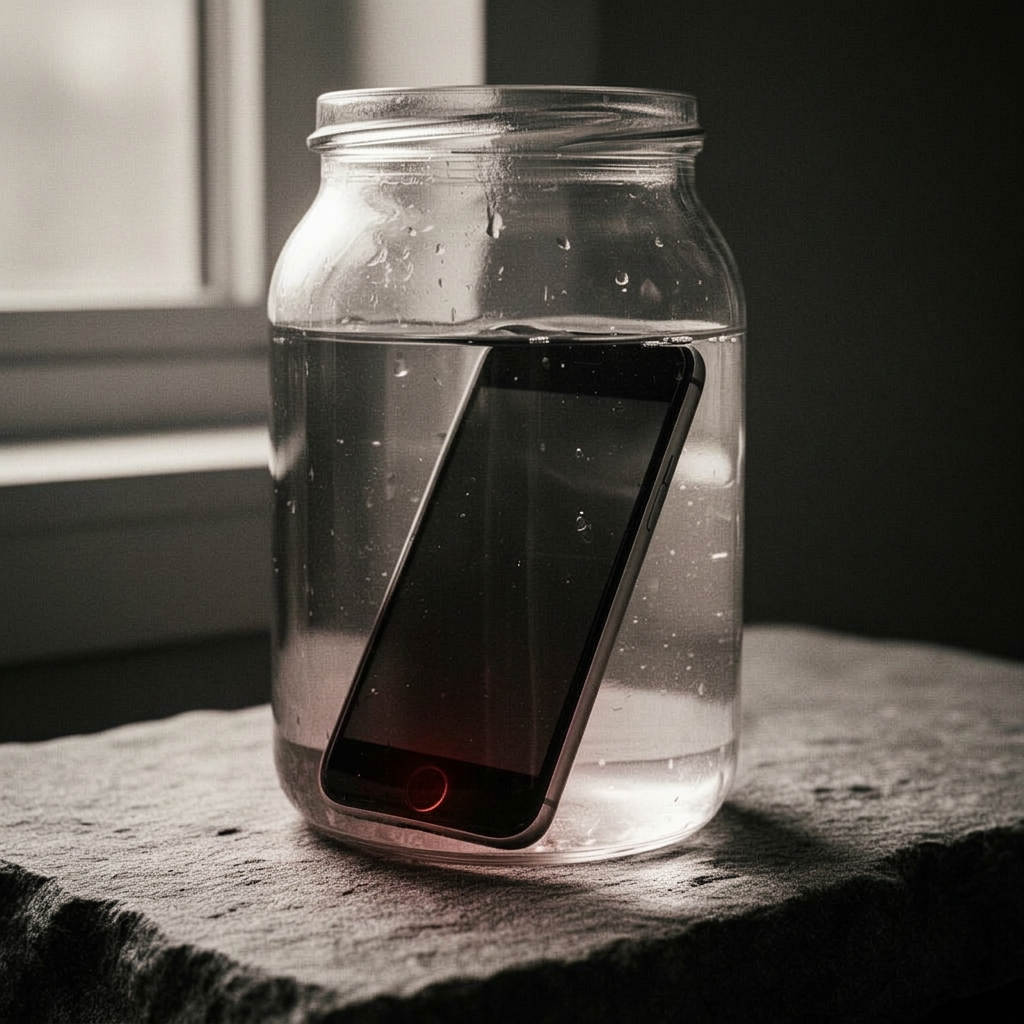
WHY YOUR INSTAGRAM FEED IS NEVER ALLOWED TO BE EMPTY
You unfollow people and clear out accounts, wanting to see only what you chose. The algorithm hears that differently — and fills every gap immediately.
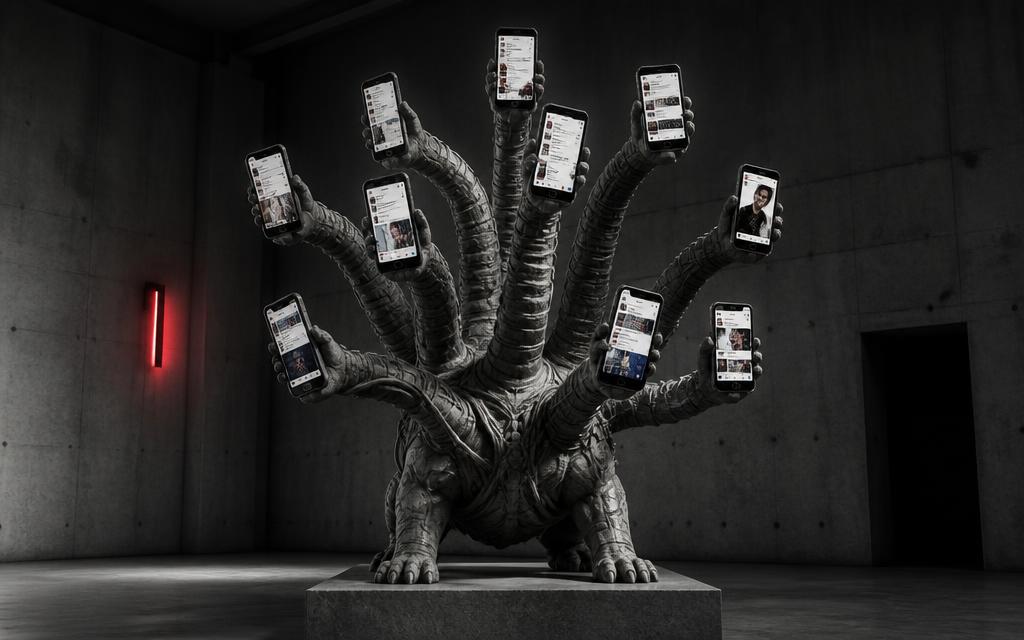
You unfollow people, clear out accounts, mute words. You want to see only what you chose. And then you open the app — and the feed is full again. Not because you followed too much, but because empty space is not allowed to exist.
Instagram, TikTok, X, YouTube — they do not work like a garden you prune. They work like a hydra: every gap is immediately filled with something new. A "suggested" account. A "Reels you might like." A promoted post. A trend you never asked for. You cut off one head and three others grow back. You cannot tidy your way out of a system designed to be full.
This Is Not a Design Flaw. This Is the Business Model.
Platforms sell attention. Attention needs content. If the feed were empty, the session would end — and with it, the advertising opportunity. So "empty" is treated as an error to be corrected instantly. The algorithm does not ask what you wanted; it asks what will keep you longest. Your follow list is just one source among many. The real supplier is the platform itself, and it never runs out of material.
The result is a strange feeling: even though you are supposedly the curator, you are never actually in charge. You clean, and the room gets messy again. You mute, and new voices appear. You say "not interested," and the system notes it only to test something slightly different next time. You are not the gardener. You are the soil.
Why Digital Hygiene Cannot Save You
The wellness internet loves the phrase "digital hygiene": unfollow, mute, set boundaries, curate mindfully. It is not wrong, but it is incomplete. It treats the problem like a messy drawer, when the real problem is someone else constantly refilling the drawer. You can sort for hours. The system is still dumping things in from the other side.
That is the difference between symptom management and structural change. A cleaner feed is a nicer cage. A real exit is leaving the cage. The honest comparison is in Digital Detox vs Detoxing from Social Media.
The Roach Motel of Content
Social media is designed to be easy to enter and hard to leave. Not because you are weak, but because the architecture is sticky: the infinite scroll, the variable reward, the social obligations, the identity you built there, the fear of missing out, the "just one more swipe." The Roach Motel comparison is not rude — it is accurate. You walk in through a door that says "connection, creativity, community," and you find yourself in a room where the walls keep moving closer, and the exit is always one more click away.
The neurological mechanism behind that stickiness is dopamine. Not the cartoon version, but the real one: your brain learns to expect relief from the feed, and then the absence of the feed starts to feel uncomfortable. That is why a "quick check" so often becomes a long session. You can read the full picture in What Even Is This Dopamine Everyone Keeps Talking About?
Why the Feed Must Stay Full
There is no natural ending. A book has a last page. A film has credits. A conversation has pauses. A feed has none of that. The absence of an ending is not a bug — it is the product. The longer you stay, the more ads you see, the more data you produce, the more predictable you become.
And the algorithm learns fast. It notices not only what you click, but what you hesitate on, what you return to, what you watch twice, what you almost commented on. Every micro-reaction is a data point. Your attention is not just being used; it is being reverse-engineered. The more you interact, the better the system gets at filling exactly the space you wanted to keep empty.
The Real Alternative Is Not a Better Feed
You cannot win by curating harder. The question is not how to make the feed tolerable. The question is whether you still want to live inside a system whose entire purpose is to prevent you from being alone with your own mind for more than a few seconds.
Peace is not a feature the platform offers. Peace is what happens when you stop participating. That does not mean becoming a digital monk. It means reclaiming the right to be bored, to think slowly, to wait, to finish a thought, to look at a tree without documenting it, to have a morning that belongs to you before the world screams into it.
The practical exit is not mysterious. It is just five steps, done in five hours: The Great Withdrawal: 5 Hours, 5 Steps. If you want a gentler diagnostic first, try a structured social media break.
The Silence You Were Looking For
At some point, after you leave, there is a strange moment: nothing happens. No notification. No new post. No little red number. Just a quiet screen. At first it can feel like loss. Then it feels like relief.
That is the space you were trying to create by unfollowing and muting. It was never available inside the app. It only exists outside it. And the moment you let the cup stay empty — really empty, without anyone refilling it — is the moment you stop being a user and start being a person again. What a network could look like that actually lets you leave: What If Social Media Were Actually Social Again?
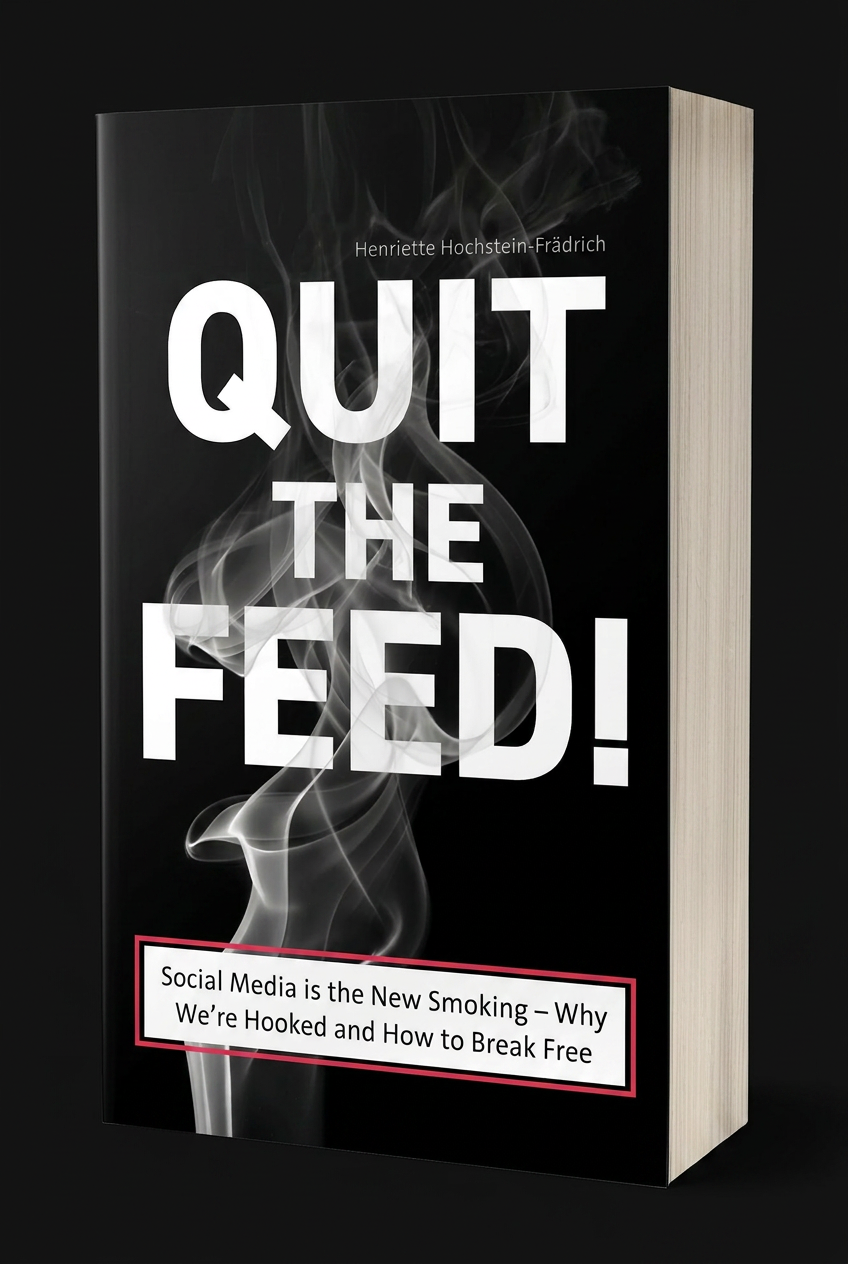
Quit the Feed! — The Real Exit
No app timer. No "conscious use." A structured way out of the feed, with the five-hour protocol, the six-month map and the real questions behind the addiction.
Read the book →By Henriette Hochstein-Frädrich, author of Quit the Feed!.
By Henriette Hochstein-Frädrich · Author of Quit the Feed!